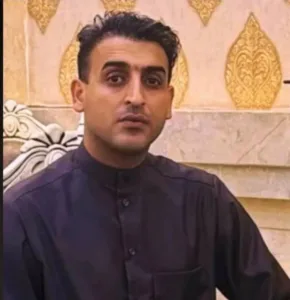
Reports from the Karun Human Rights Organisation indicate that Shaham Soleimani, an Ahwazi citizen currently held in Ward 5 of Sheyban Prison in Ahwaz, was sentenced on Tuesday, 4 November 2025, to 10 years in prison on charges of “collaboration with Israel.” Soleimani, a resident of Ahwaz and one of those detained following the Twelve-Day War, is approximately 60 years old and is reported to be in poor physical condition.
The sentence was issued by Ehsan Adibimehr, head of Branch 1 of the Ahwaz Revolutionary Court, known as the “Judge of Death” or “Khalkhali.” Earlier, the Karun Organisation had reported that more than 80 Ahwazi people who were arrested in security raids after the Twelve-Day War between Iran and Israel had been transferred to Wards 5 and 8 and the quarantine section of Sheyban Prison.
According to credible reports, these prisoners, after weeks of prolonged interrogations and severe physical and psychological pressure, were sentenced by Branch 1 of the Ahwaz Revolutionary Court, presided over by Adibimehr, to five years in prison on fabricated charges of “espionage and collaboration with Mossad,” one year in prison for “propaganda against the regime,” two years in prison for “insulting Ali Khamenei,” two years of travel ban, and two years of mandatory participation in so-called “reform” sessions organised by the Basij and IRGC forces.
Meanwhile, in some cases, sentences such as double execution and life imprisonment have also been issued against Ahwazi political prisoners—verdicts that families and independent lawyers say are based on confessions extracted under torture.
The continued arbitrary arrests, long-term sentences, and torture of Arab political prisoners constitute a blatant violation of human rights and have devastating effects on the families and social fabric of the Arab population in Ahwaz. International human rights organisations have repeatedly warned about the Islamic Republic’s systematic use of torture to extract confessions in prisons, but this practice continues, and the pressure on Arab citizens in the Ahwaz (Khuzestan) region has intensified.