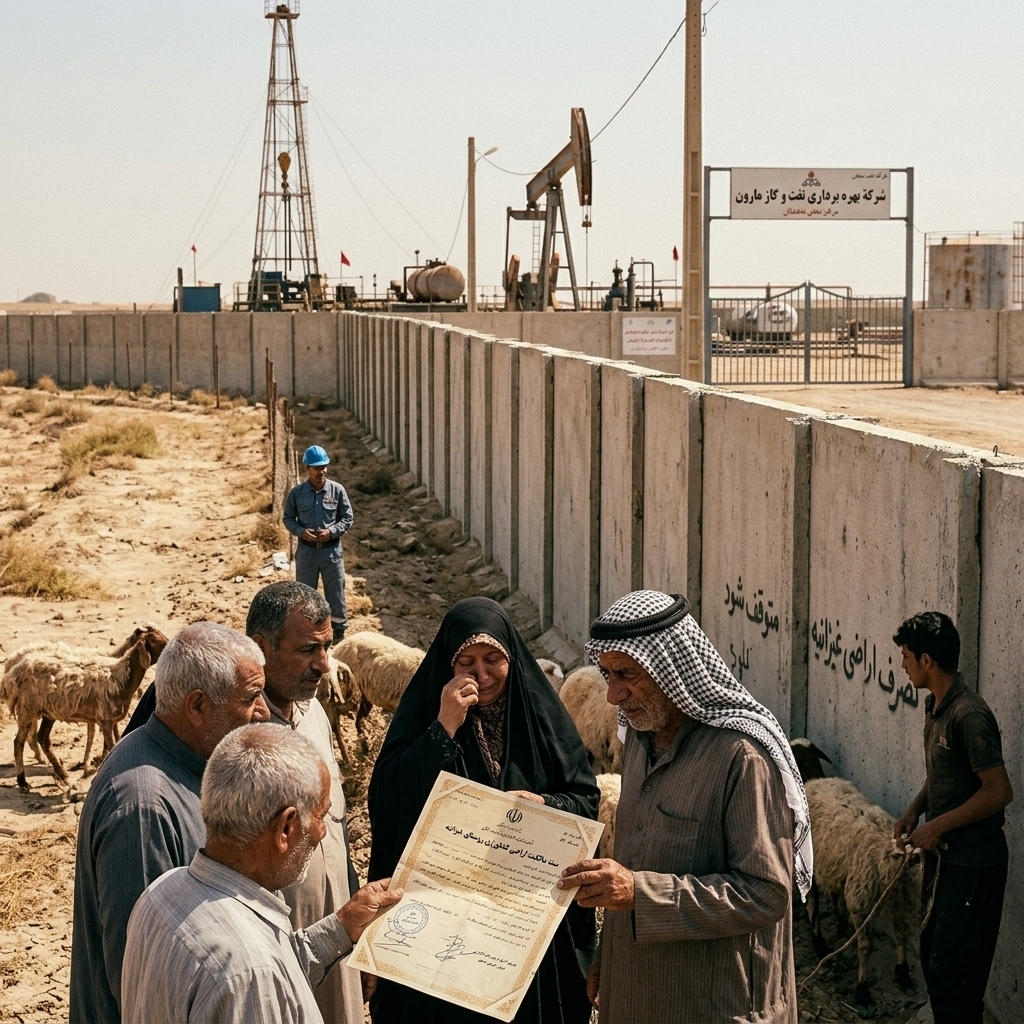
Local sources in Ahwaz have reported that Iran’s Ministry of Oil has launched a new round of seizures of land belonging to indigenous residents. According to these reports, residents of the village of Ouda, in the Ghizaniyeh district, particularly in the vicinity of the Maroon 6 oil field, are facing increasing pressure to vacate and relinquish their land.
According to these sources, the oil company is seeking to take possession of the ancestral lands and properties of Arab citizens through persistent pressure and threats. Government authorities, citing documents that residents describe as “ambiguous and baseless,” claim that the land was sold in the distant past by certain tribal sheikhs. Residents of the area have categorically rejected this claim.
They maintain that the land constitutes part of their historical heritage and was never sold or transferred.
Meanwhile, reports indicate that residents’ efforts to seek legal redress through the judicial authorities have reached an impasse. Testimonies from local residents point to systematic corruption and collusion within the legal department of the oil company, specifically involving individuals identified as “Khamis,” “Omreh,” and “Zahedi.”
Local sources allege that, rather than conducting a fair examination of documents presented by indigenous landowners, this department has exploited the residents’ economic hardship and their inability to pursue costly legal proceedings, thereby violating their legitimate rights.
Regional activists regard the current situation in Ouda village and throughout Ghizaniyeh as a reflection of the broader conditions prevailing across the Ahwaz region. While these villages sit atop vast oil reserves, and the substantial revenues generated from them flow directly into the Iranian state treasury—funding what activists describe as the machinery of repression and affiliated militias—the indigenous Arab residents of the region are left with poverty and deprivation of even the most basic necessities of life.
Young people in these areas have also been denied employment opportunities at the very oil facilities that, according to local residents, have brought them little beyond severe environmental pollution.
Local observers regard the continued seizure of land as clear evidence, in their view, of the systematic implementation of policies aimed at impoverishing the people of Ahwaz and altering the region’s demographic composition. They argue that these policies are intended to establish complete control over the region’s natural wealth and forcibly displace indigenous residents from their ancestral lands.