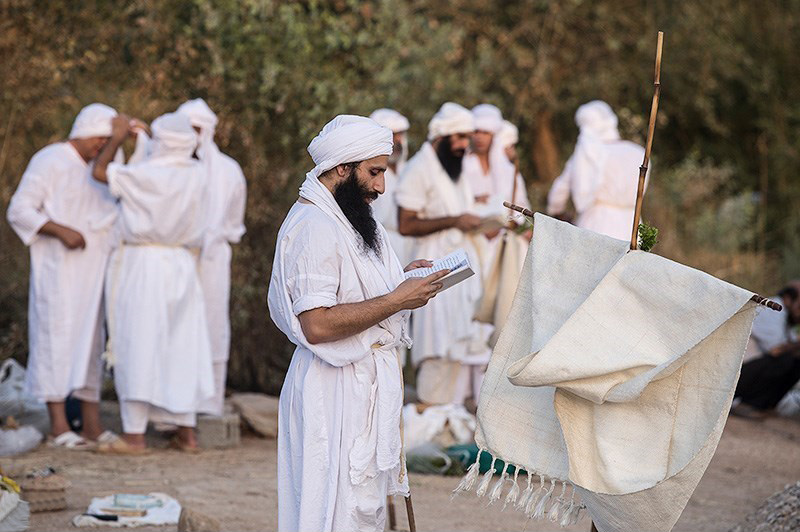
As the final days of Tir approached, members of the Mandaean community in the Ahwaz Region held ceremonies marking their religious New Year, known as Dehwa Rabba (the Great Feast), along the banks of the Karun River.
The ceremony took place amid longstanding concerns over systematic discrimination against this religious minority and the failure to fully recognise and guarantee their civil rights under existing laws.
According to the Karun Human Rights Organization, Dehwa Rabba is the most important religious occasion in the calendar of the followers of John the Baptist and, according to Mandaean beliefs, coincides with the anniversary of the creation of humankind.
The observance is closely connected to “living water” (Mia Hayyi). Participants wear traditional white garments known as Rasta, while Mandaean religious leaders perform the Masbuta, or baptismal immersion, in the waters of the Karun River.
With a history spanning more than two thousand years, the Mandaean community is considered one of the indigenous and historically established communities of southwestern Iran and the areas surrounding the rivers of the Ahwaz Region.
Available estimates suggest that between 5,000 and 10,000 members of this monotheistic religious minority live in cities including Ahwaz, Khafajiyeh (Susangerd), Mohammerah (Khorramshahr), and Ma’shour (Mahshahr).
Although the province’s Director General of Cultural Heritage attended the ceremony, human rights organisations have repeatedly stressed that the fundamental rights of the Mandaean community—including equal access to employment in government institutions, equal treatment before the courts, and protection of their places of worship—must be guaranteed and upheld through legal and structural measures rather than symbolic gestures alone.