Introduction and Overview
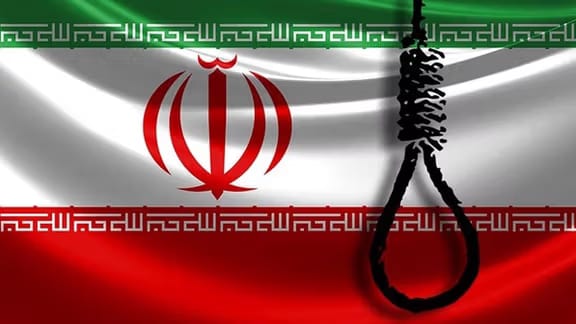
The execution machinery of the Islamic Republic of Iran has continued to operate at an unprecedented and alarming pace in recent months. Documentation and field investigations indicate that the judiciary, through systematic and flagrant violations of fair trial standards, has significantly accelerated the issuance and implementation of death sentences against citizens, civil society activists, and individuals detained during nationwide protests. Many of these executions have been carried out in secret, under complete media blackout, and without respecting the defendants’ most basic legal rights.
Escalating Repression Under the Cover of War
Amid the ongoing military conflict between Iran and Israel, the Islamic Republic’s security and judicial institutions have exploited the wartime environment to intensify their crackdown on domestic critics and civil society. By taking advantage of the international community’s focus on regional conflict, the authorities have effectively reduced the political and human rights costs associated with executing dissidents. At the same time, prosecutions against civil and political activists on charges such as “espionage,” “collaboration with hostile states,” and “acting against national security” have sharply increased, often serving as the basis for seeking capital punishment.
Unfair Trials and the Situation of Protest Detainees
The implementation of death sentences under charges such as moharebeh (“enmity against God”), baghi (“armed rebellion”), and efsad-e fel-arz (“corruption on earth”) has been accompanied by gross violations of due process. Numerous reports indicate that these convictions have relied primarily on confessions extracted under severe physical and psychological torture during prolonged periods of solitary confinement.
In many cases, executions have been carried out secretly, without prior notification to defense lawyers and without allowing prisoners a final visit with their families. Furthermore, dozens of political prisoners and prisoners of conscience have recently been transferred to solitary confinement in preparation for execution, raising serious concerns about the imminent implementation of additional death sentences and the use of execution as a tool of psychological intimidation.
Documented Cases
According to cross-verified information and confirmed reports published by Iran International between December 2025 and April 2026, the executions of dozens of protesters and political prisoners have been documented.
Among those executed following the nationwide protests were Mehdi Rasouli (25) and Mohammadreza Miri (21), both arrested during the January protests and hanged at Vakilabad Prison in Mashhad. Other documented cases include Kurdish protester Mehrab Abdollahzadeh, who was executed following a conviction reportedly based on forced confessions, as well as athlete and protester Saleh Mohammadi. Additional executed protesters include Sasan Azadvar, Ebrahim Dowlatabadi, Erfan Kiani, and Amirhossein Hatami.
Among political and security-related prisoners, documented cases include Amer Ramesh, who was convicted on charges of baghi (“armed rebellion”), Kourosh Keyvani, an Iranian-Swedish dual national executed on 17 March 2026 following what rights groups described as a politically motivated prosecution, and Mohammad Masoum Shahi and Hamed Validi, whose death sentences were carried out on 20 April 2026. Other political prisoners executed during this period include Mehdi Farid, Soltan-Ali Shirzadi Fakhr, Aqil Keshavarz, Javad Naeimi, Bahram Choobi Asl, Babak Shahbazi, Roozbeh Vadi, and Majid Masibi.
Targeted Repression of Ethnic Minorities
The wave of executions during this period has disproportionately affected Iran’s marginalized ethnic regions. A significant number of the executed political prisoners were Arab, Kurdish, and Baluch activists and citizens. Revolutionary Courts in cities such as Ahwaz, Zahedan, Sanandaj, and Urmia have recorded some of the highest numbers of death sentences and executions, reflecting what human rights organizations describe as a pattern of systemic discrimination and targeted repression against ethnic minorities in Iran.
Conclusion and Call for Urgent Action
The Karoon Human Rights Organization strongly condemns the systematic use of executions by the Islamic Republic of Iran and warns that the continuation of the current wartime conditions places the lives of dozens of additional detainees at immediate risk.
The organization calls on the United Nations Human Rights Council, the Independent International Fact-Finding Mission on Iran, the UN Special Rapporteur on the situation of human rights in Iran, and the broader international community to take coordinated and decisive diplomatic action to prevent further executions.
The establishment of independent monitoring mechanisms to urgently assess the situation of political prisoners in Iran, together with immediate international intervention to halt this ongoing pattern of executions, is both a legal obligation and a humanitarian necessity.