September 15 – The Karun Human Rights Organization has released new information regarding the brutal killing of a 14-year-old girl in the city of Fallahiyeh. According to the organization, the victim, identified as Sheyma Soleymanian, was attacked on Sunday, September 14, while on her way to a premarital counseling center with her fiancé. The assailants, believed to be members of her own extended family, killed her in a violent assault.
Several days after the incident, the organization received additional testimony from credible sources indicating that police and judicial authorities failed to adequately protect Sheyma’s life, despite being aware of the threats she faced.
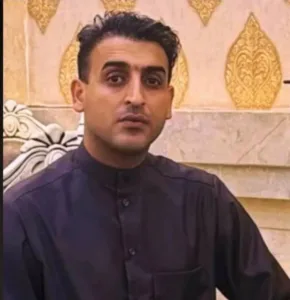
Sheyma had reportedly been in a long-term romantic relationship with Mohammad G., an 18-year-old young man. She wished to marry him, and Mohammad’s family had made repeated formal proposals to her father, all of which were rejected without explanation. At one point, Mohammad’s family considered filing a legal complaint, but a lawyer informed them that under Iranian law, a girl’s marriage remains entirely at the discretion of her father or paternal grandfather — making any legal action futile.
At one stage, Sheyma left her home and went to Mohammad’s family residence, but they handed her over to the police. During police intervention, Sheyma openly declared her love for Mohammad and her willingness to risk her life for their relationship. Nonetheless, after negotiations with mediators and her family, the police returned her to her parents’ custody.
The family’s refusal to permit the marriage persisted, leading Sheyma and Mohammad to run away together. In response, Sheyma’s relatives devised a plan to lure her back, reaching an agreement with Mohammad’s family to marry off Mohammad’s sister — who was a close friend and intermediary between the couple — to one of Sheyma’s relatives. After paying the dowry and finalizing the arrangements, Mohammad’s family convinced the young couple that this time their marriage would be allowed to proceed, and persuaded them to return.
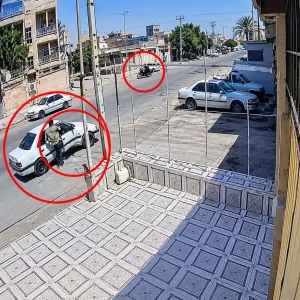
On the day scheduled for premarital medical examinations, Sheyma and Mohammad traveled by taxi to a clinic in Fallahiyeh. Upon arrival, Mohammad stepped out to confirm administrative procedures, leaving Sheyma in the car with the driver. At that moment, several men attacked the vehicle.
Eyewitnesses report that the attackers were Sheyma’s relatives. They assaulted her with knives, seriously injuring the driver who tried to protect her. After stabbing her multiple times, one of the assailants decapitated Sheyma before fleeing the scene.
Systemic Issues: Child Marriage and Lack of Legal Protections
Under Iranian law, a father or paternal grandfather has the authority to marry off a girl to any man he chooses. The father’s permission is a legal requirement for a girl’s marriage, and she cannot marry without it.
Child marriage remains widespread across Iran, and the country’s legal and judicial system has failed to curb the practice. Section 1041 of Iran’s Civil Code stipulates that the marriage of a girl under 13 or a boy under 15 requires both a guardian’s consent and a court ruling verifying that the marriage serves the child’s best interest. Section 1042 states that once a girl reaches 13 or a boy 15, no court ruling is required, but the father’s or paternal grandfather’s permission remains mandatory for the girl.
By international standards, marriage under the age of 18 is considered child marriage and is prohibited in many countries, as minors are not deemed legally or psychologically fit to enter binding contracts or form families. Iranian law, by recognizing marriage at 13 as lawful, exposes children to significant harm, as illustrated by Sheyma’s case.
Weak Legal Deterrence Against “Honor Killings”
Reliable statistics on so-called “honor killings” in Iran are scarce, as many such crimes go unreported or unpublicized. Nevertheless, human rights groups report a rising trend of gender-based violence. The lack of strong legal deterrence has contributed to the escalation of these crimes.
Under Iranian law, the punishment for murder is retribution (qisas — execution), but this is contingent upon the victim’s family requesting it. In honor killings, the perpetrators are usually close relatives — often the legal heirs themselves — and thus no complaint is filed or the complaint is withdrawn. In these cases, the retribution sentence is dropped, and the perpetrator is punished only for the public aspect of the crime.
The Iranian Penal Code prescribes three to ten years’ imprisonment for such cases, but courts frequently impose the minimum sentence when there is no private plaintiff. This penalty is grossly disproportionate to the crime and fails to deter future incidents.
In many countries, premeditated murder — as honor killings often are — constitutes an aggravating circumstance resulting in harsher punishment. In Iran, however, the absence of protective legislation allows perpetrators to escape with minimal consequences, perpetuating the cycle of violence against women and girls.
Call to Action
The Karun Human Rights Organization strongly condemns this heinous crime and holds Iran’s legislative and judicial institutions accountable for their failure to protect women and girls. We urge Iranian lawmakers to enact comprehensive legal reforms to safeguard the lives of children and women and to provide meaningful deterrence against gender-based violence.