According to reports received by the Karoon Human Rights Organization, agricultural communities and the transport sector in the northeastern areas of Ahwaz are facing a severe economic and livelihood crisis. The situation has reportedly arisen following actions by Iranian state institutions that local sources describe as the unfair appropriation of farmers’ agricultural produce and the loss of income for large numbers of truck drivers in favor of companies operating from outside the Ahwaz region (Khuzestan).
Unfulfilled Promises and the Wheat and Barley Crisis
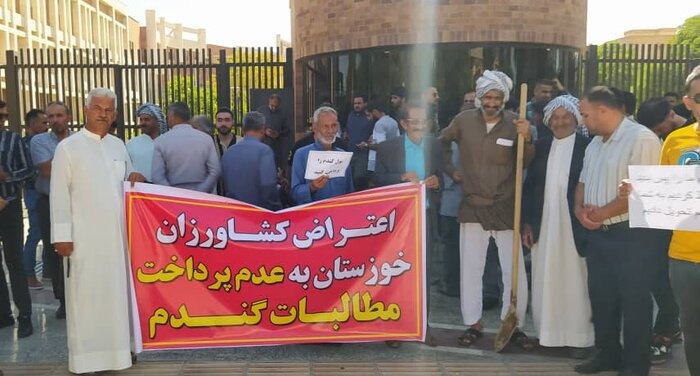
Local sources told the Karoon Human Rights Organization that government agencies responsible for purchasing wheat and barley—crops entirely dependent on water from the Karun River for irrigation—have taken delivery of farmers’ harvests but have failed to pay them for their produce.
According to the report, officials had promised farmers before the harvest season that they would receive an advance payment equal to one-third of the value of their crops to help cover production and living expenses. However, these promises were never fulfilled. As dissatisfaction grew, officials and government supervisors at collection centers reportedly engaged in verbal confrontations with protesting farmers and agricultural workers in an apparent attempt to contain the protests.
Truck Drivers Targeted Through “Deceptive Offers”
The crisis has also spread to the road transport sector, where truck driving constitutes the primary source of income for many residents.
According to preliminary estimates, approximately two-thirds of the trucks owned by local residents have either been taken from their owners or transferred through what sources describe as deceptive marketing schemes. These offers reportedly included promises of newer truck models, lower prices, and easier financing arrangements.
Available information indicates that intermediary companies established in Tabriz and other parts of Iran have directly targeted trucks owned by Arab residents of the region. Although similar practices have reportedly occurred elsewhere in the country, local sources say the largest concentration and most significant impact have been in the Ahwaz region.
Growing Role of Middlemen and Concerns Over Social Consequences
Local observers have warned that the crisis could have serious consequences for social stability and public security. They note that the involvement of local brokers acting as intermediaries within their own communities risks further deepening tensions.
According to these reports, the primary financial benefits ultimately accrue to institutions and investors whose identities remain unclear, while the economic burden falls on truck drivers, livestock breeders, farmers, and ordinary citizens. Human rights sources warn that the continued loss of livelihoods and economic rights could fuel social tensions and conflict within affected communities.