By Ali Heydari
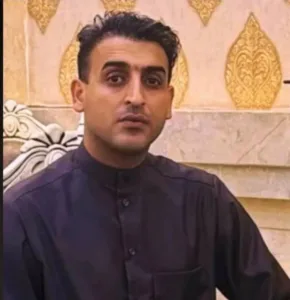
Mehdi Hassani and Behrouz Ehsani Eslamlou, two political prisoners, were executed at Ghezel Hesar Prison in Karaj on the morning of Sunday, July 27, 2025. Both were convicted on charges of alleged membership in the People’s Mojahedin Organization of Iran (PMOI) and crimes including “armed rebellion (baghi),” “enmity against God (moharebeh),” and “corruption on earth (efsad fel-arz).” These executions are part of a state policy that employs the death penalty as a tool of intimidation and repression. This act not only represents a blatant violation of human rights, but also highlights the vindictive and inhumane nature of the Islamic Republic’s judiciary, which routinely uses political executions to silence dissent.
The death penalty, by its very nature, is an inhuman and irreversible punishment. The deliberate taking of a human life, regardless of the accusations involved, is fundamentally incompatible with the principles of human dignity and the right to life, as enshrined in international instruments such as the Universal Declaration of Human Rights.
Mehdi Hassani and Behrouz Ehsani Eslamlou, arrested in Zanjan and Tehran in 2022, respectively, were tried in courts that, according to human rights organizations, failed to meet international standards for fair trials. Their convictions were marked by torture, prolonged solitary confinement, and a lack of transparency—clear signs of retaliatory justice. The executions were carried out without prior notice to their families or legal representatives, further underscoring the regime’s disregard for even the most basic principles of justice.
The Islamic Republic of Iran continues to use executions as a means of spreading fear and preventing the emergence of political alternatives. Reports indicate that the number of executions has risen sharply since the conclusion of the 12-day war with Israel.
According to Iran Human Rights, at least 975 people were executed in 2024, with over 70% of these executions taking place after the onset of international tensions. These figures suggest that the regime, under pressure, seeks to consolidate its power through public intimidation and the violent suppression of opposition. The execution of Mehdi Hassani and Behrouz Ehsani Eslamlou sends a chilling message to civil society and political activists: any effort toward change or protest will be met with the harshest possible punishment.
Despite this atmosphere of repression, anti-death penalty initiatives are gaining momentum inside Iran. Human rights organizations, including Amnesty International, have repeatedly called for the abolition of capital punishment. Protests by political prisoners also reflect the resistance of civil society against this inhumane practice. These efforts must be supported and become a central focus of the opposition’s campaign.
Abolishing the death penalty must be a core demand in the platform of any future democratic system in Iran. No government claiming to uphold justice and human rights can justify a punishment that is inherently inhumane and vengeful.
Opposition to the death penalty is not only a moral stance but a political necessity for building a free and democratic Iran. The international community and the Iranian opposition must unite and intensify pressure on the Islamic regime to end this brutal practice. The executions of Mehdi Hassani and Behrouz Ehsani Eslamlou are a stark reminder of the urgency of this struggle.
The future of Iran must be free from the death penalty in order to ensure true justice and the preservation of human dignity.