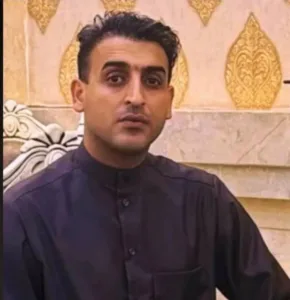
The Karun Human Rights Organization has documented in this special report a series of alarming cases of human rights violations against political and conscience prisoners in Sheiban and Sepidar prisons in Ahwaz. The report warns of a systematic pattern of life-threatening deprivation of medical care and repressive treatment, which continues to expand in these facilities.
The Death of Amir Nisi: Silent Killing Through Denial of Medical Care
Amir Nisi, an Ahwazi Arab political prisoner, died on the evening of 27 Aban (November 17, 2025) due to severe internal infection and intentional neglect by prison authorities in Sheiban.
Sources inside the prison indicate that Nisi suffered for an extended period from a widespread infection caused by untreated ingrown hair (“mo bargashti”). Despite high fever and rapidly deteriorating health, prison authorities deliberately prevented his transfer to a hospital.
The Karun Human Rights Organization considers Nisi’s death a clear example of “silent killings” in Iranian prisons and stresses the urgent need for accountability for those who ordered and carried out this neglect.
Mohammad Bavi on the Brink of Death: Open Wounds, Severe Infection, and Complete Denial of Care
Credible reports indicate that the condition of Mohammad Bavi, another Ahwazi Arab political prisoner, is critically serious. Following abdominal tumor surgery, lack of any medical follow-up led to widespread infection and fully opened stitches, so that according to fellow inmates, “his intestines are visible through the abdominal gap.”
Despite this life-threatening situation, prison authorities have blocked hospital transfer and provided only painkillers. His brother, Ali Bavi, who went on a hunger strike to protest this situation, faced punitive measures, and both were moved to harsher wards and solitary confinement.
These actions reflect the systematic use of medical neglect as a tool of punishment and repression.
Hussein Sahagi: Severe Mental Deterioration and Forced Return from Hospital
Reports indicate that Hussein Sahagi, an Arab political prisoner, after suffering severe pressure in the FATA detention center and hospitalization at Ahwaz psychiatric center, was forcibly returned to Sheiban prison before completing treatment.
His mental state is close to total collapse, and he has refused to eat, drink, or speak.
According to sources, Khosro Tarfi, the head of Sheiban prison, humiliatingly told him:
“If it were the 1980s, I would have let you sing your little tunes.”
Despite the serious danger to his life, medical leave has been denied by security officials.
Punishment of Hunger Strikers: Transfer to Unsanitary Solitary Cells
On 2 Aban (October 24), eight political prisoners, who had been on hunger strike since 28 Mehr (October 19) to protest medical neglect, were punished by being moved to solitary confinement.
Available evidence shows that the solitary cells in Sheiban prison are extremely unsanitary, deliberately used as a tool to break hunger strikes through pressure.
Medical Crisis in Sepidar: Ahmad Naseri in Coma and Suspicious Official Narrative
In Sepidar prison, the condition of Ahmad Naseri, 36, father of three, has also been reported as critical. Arrested in Mordad 2025 (August 2025), Naseri showed disease symptoms for several days without proper treatment, receiving only a single prescribed pill. He was eventually transferred to Imam Hospital, where he is now in a coma.
His family rejects official claims of “suicide”, emphasizing that untreated medical deterioration was the primary cause of his hospital transfer.
Systematic Denial of Medical Care as a Form of Repression
Findings indicate that medical neglect in Sheiban and Sepidar prisons is systematic, deliberate, and organized. Prison authorities, including Khosro Tarfi, play a direct role in creating and perpetuating this situation. Political and conscience prisoners are intentionally deprived of medical treatment, medical leave, and essential services. The transfer of sick or hunger-striking prisoners to punitive and solitary wards is part of a well-established pattern of repression.
The Karun Human Rights Organization calls on UN Special Rapporteurs, human rights bodies, and the international community to take immediate oversight and pressure measures to prevent further cases and hold responsible authorities accountable.