More than five months after the end of the twelve-day Iran–Israel war, the security crackdown in the Ahwaz region (Khuzestan Province) not only continues but appears to be intensifying. Sources from the Karun Human Rights Organization report that at least seven additional political prisoners have been transferred to Ward 5 of Sheiban Prison in Ahwaz.
All seven detainees are currently held under temporary detention orders and were transferred despite the fact that Ward 5 is operating far beyond its official capacity and is widely reported to be in severely overcrowded and inhumane conditions.
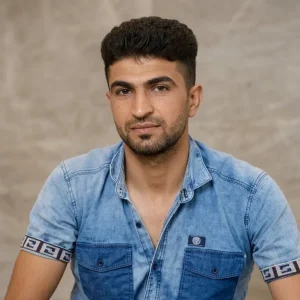
According to the reports, the prisoners—who were arrested in November 2025 by security forces affiliated with the Intelligence Organization of the Islamic Revolutionary Guard Corps (IRGC, “News Headquarters 114”)—were transferred to Ward 5 on Monday, December 1. Among them are Aria Gholizadeh, 25, son of Jamshid, and Abolfazl Hosseinzadeh, 27, both residents of Gotvand.
They were arrested by IRGC intelligence forces on charges of “insulting Ali Khamenei” and “online activity,” placed under the authority of the Dezful Revolutionary Court, and reportedly held in solitary confinement for 15 days.
Previously, more than 80 young Arab residents of Ahwaz, arrested during security raids following the outbreak of the recent Iran–Israel war, had already been transferred to the same ward.
The sentences issued in these cases are described as exceptionally harsh and unprecedented, including two death sentences and prison terms ranging from three to eleven years, reflecting the judiciary’s severe approach toward these پروندهها.
Credible reports indicate that following weeks of prolonged interrogations and intense physical and psychological pressure, the detainees were sentenced by Branch One of the Ahwaz Revolutionary Court, presided over by Judge Adibi Mehr, to:
- Five years’ imprisonment on the fabricated charge of “espionage and collaboration with Mossad,”
- One year of discretionary imprisonment for “propaganda against the state,”
- Two years of discretionary imprisonment for “insulting Ali Khamenei,”
- A two-year travel ban, and
- Mandatory participation for two years in so-called “reform sessions” organized by the Basij and IRGC forces.
In some cases, life imprisonment and even death sentences have reportedly been issued. Families and independent lawyers assert that these verdicts are based solely on confessions extracted under torture.
This situation persists despite repeated warnings from international human rights bodies regarding the systematic use of torture by the Islamic Republic of Iran to extract forced confessions. The continuation of arbitrary arrests and the imposition of lengthy sentences against Arab political prisoners constitute a clear violation of human rights and have had devastating consequences for families and the broader social fabric of the Arab population in Ahwaz.