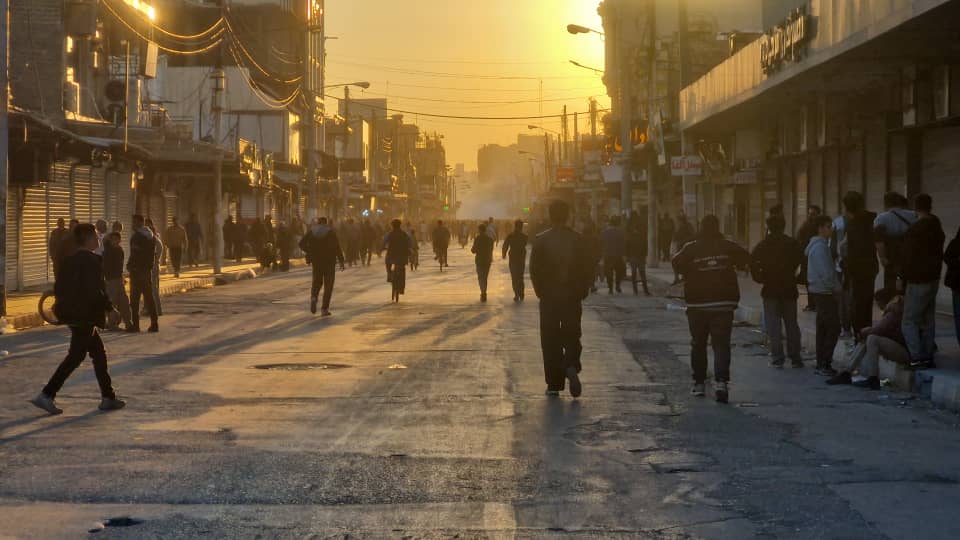
According to reports received by the Karun Human Rights Organization, during peaceful protests in Ahwaz that escalated due to the intervention of security forces, at least two citizens were killed by direct gunfire.
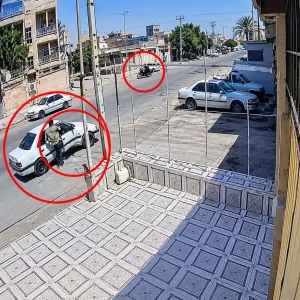
The reports identify one of the victims as Naji Savari, 55, son of Qasim, a resident of the Golestan neighborhood of Ahwaz. On Friday, while working at his fruit stand, he was shot in the neck by security forces. He was also known by the name “Abu-Mithaq” and died on the spot.
Field reports indicate that on Friday and Saturday, January 8–9, 2026, protests and clashes with security forces took place in various neighborhoods of Ahwaz, including Alavi (Hey al-Thawra), Golestan, Kianpars, Zouyeh, Kut Abdollah, Zeytun Karmandi, the Central Bazaar, Zargan, Kourosh (Hey al-Sha’ab), and Sheiban.
Simultaneously, demonstrations were reported in Abadan, Mahshahr, Mohammerah (Khorramshahr), and Falahieh (Shadgan). Some local sources also claimed that Iraqi Hashd al-Shaabi forces were present in Ahwaz to assist in suppressing protests, though this has not been officially confirmed.
On January 8, protests in Abadan and Falaki Square in Mohammerah were reported. Local sources stated that an Arab citizen named Ali Sekini and a woman were injured by direct gunfire. Some sources reported that Ali Sekini was killed, though this has not been officially verified.
The Karun Human Rights Organization reported that around 35 people were arrested on the first day of protests in Abadan alone, with most cases transferred to the Intelligence Organization of the IRGC (Information Base 114) located on Siklin Street.
Additionally, Qasim Mozaffari, a young protester from Ahwaz, was arrested on Tuesday, January 5, 2026, at his home in the Zeytun Karmandi area by security forces. Mostafa Khorsand, a citizen from Abadan, was arrested at his workplace in the Abadan power plant on Wednesday, January 6, 2026.
Earlier in the protests, Karun Human Rights Organization reported that 60–80 men detained in Izeh were transported to Sheiban Prison in Ahwaz on two buses, while 30–40 women detainees from Izeh were separately transferred to the female ward of Sepidar Prison in Ahwaz. Sources confirmed that these detainees faced charges including “participation in unrest” and “actions against national security.”
At the same time, reports emerged of dozens of arrests in Ramz (Ramhormoz), though precise details regarding the number of detainees, detention locations, and legal status remain unknown.
Rising Number of Fatalities Nationwide
Meanwhile, the Human Rights Organization of Iran stated that amid expanding anti-government protests and a nationwide internet shutdown lasting over 60 hours, at least 192 protesters have been killed in various cities, especially Tehran.
According to the statement, the reported figures only include verified cases, and multiple reports suggest higher fatalities. Due to internet restrictions and limited access to information, independent verification of these claims is currently impossible.
The organization warned against the continued and escalating crackdown and called for urgent international attention to the human rights situation in Iran.