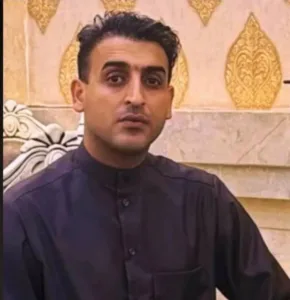
One of the participants in the performance of the anthem “From the Karoon to the Olive Tree” told the Karoon Human Rights Organization: “They asked us to sing an anthem for Palestine. When we sang for Ahwaz, we were suppressed.”
Following the release of the music video and epic anthem “From the Karoon to the Olive Tree,” the Basij Intelligence Organization and the Islamic Revolutionary Guard Corps (IRGC), through the body known as “News Headquarters 114,” launched a widespread campaign of summonses, threats, and arrests targeting Arab artists, poets, and cultural activists in Ahwaz.
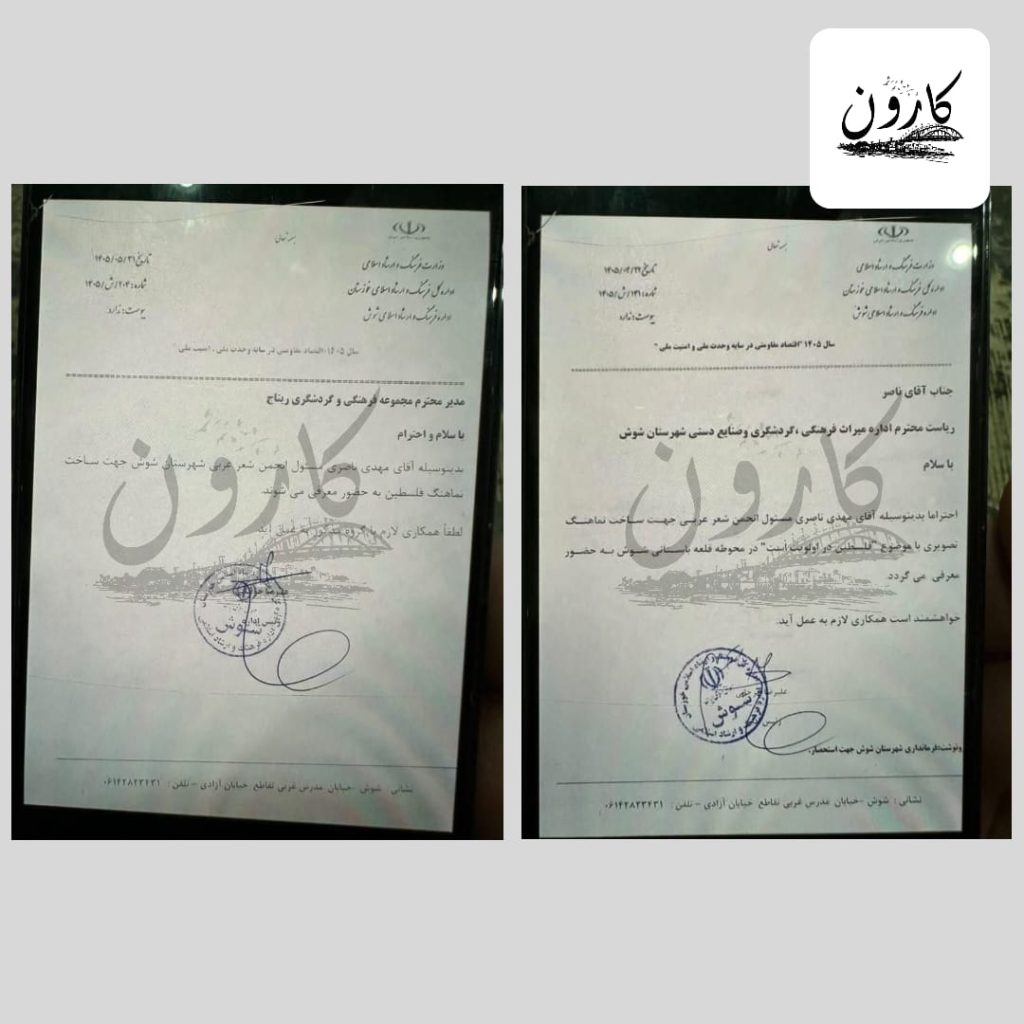
These measures have been carried out despite the fact that the work had previously received official production permits from government institutions.
Double Standards: Revelations by One of the Anthem’s Producers
One of the participants involved in producing the artistic work spoke to the Karoon Human Rights Organization and revealed details highlighting the government’s deeply contradictory and security-driven approach to indigenous cultural issues.
The cultural activist told the Karoon Human Rights Organization: “They had given us permission to sing for ‘Palestine.’ But when we sang for ‘our own Ahwaz,’ all the officials involved in the production of the anthem were arrested or threatened with arrest. I was also threatened with arrest.”
He added: “Government institutions wanted us to perform an Arabic-language anthem titled ‘Palestine Comes First.’ But under these circumstances, when our own people are living in poverty and suffering from a lack of water and electricity, how can Palestine come first?”
These statements point to systematic censorship and the coercive response of security institutions to any peaceful expression of the identity, grievances, and local and civil demands of the Arab population.
Amid the security crackdown related to this case and the wider wave of repression against cultural activists in various cities, a number of artists and civil activists have been subjected to prosecution and arrest.
Mehdi Naseri, head of the Arabic Poetry Association in Sūs (Shush) County and a civil and cultural activist, is among those arrested by IRGC Intelligence. Aref Naseri, another civil and cultural activist, has also been arrested by security authorities in connection with the same case.
As the wave of repression continued, Mehdi Khaledi, a filmmaker and cultural activist from Shushtar (Tostar), was arrested and transferred to an undisclosed location.
In addition to these activists, Mohammad Kaabi, also known as “Abu Idris,” a resident of Shush (Sūs), was also arrested as part of the same campaign targeting cultural activists.
While the detainees have been targeted, security institutions have also exerted intense pressure on other members of the anthem’s production team. Hossein Ahwazi and Mehdi Zaeri, the two principal singers of the song, were summoned by IRGC Intelligence and subjected to severe pressure and threats.
IRGC Intelligence Intervention and Removal of the Artistic Work
A notable aspect of this case is the extralegal intervention by IRGC Intelligence. The anthem “From the Karoon to the Olive Tree” had obtained an official production permit from the Ahwaz Department of Culture and Islamic Guidance after completing the required legal procedures.
However, following the release of the work’s music video on YouTube, IRGC Intelligence immediately intervened. In addition to forcing the removal of the video from the platform, the organization subjected all those involved in its production to prosecution, arrest, and threats.
The Karoon Human Rights Organization considers this course of action a clear example of the suppression of freedom of expression, violation of the cultural rights of minorities, and the application of discriminatory security standards. The peaceful expression of cultural demands through art and music is a fundamental and internationally recognized right.
The organization strongly condemns the recent crackdown and calls for the immediate cessation of pressure on artists and cultural activists, full transparency regarding the status of those detained, and the unconditional release of all individuals being held by security institutions in connection with this case.