
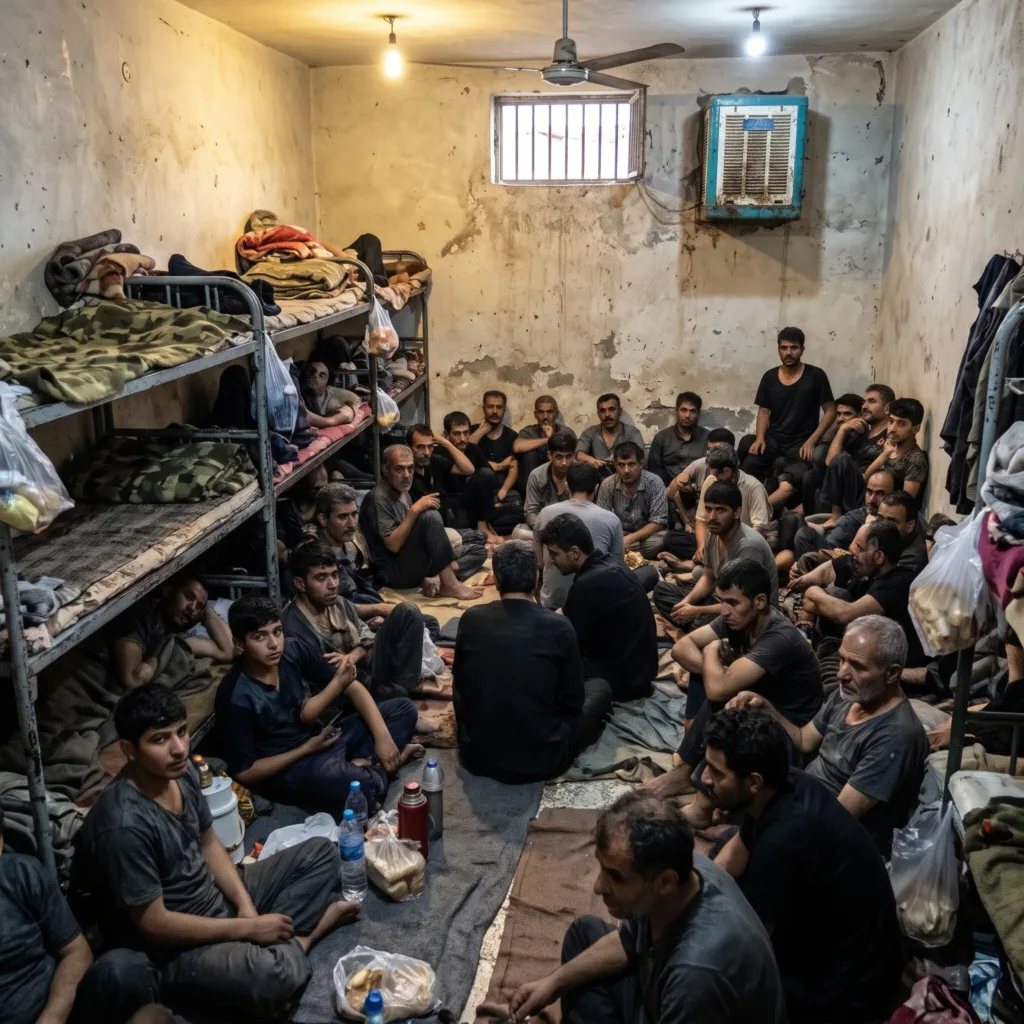
Testimonies received by the Karoon Human Rights Organization reveal the critical and inhumane conditions in Section 4 of Sheiban Prison in Ahwaz. This section, housing 175 political and ideological prisoners, is marked by systematic violations of the most basic standards of prison management, leading to the gradual deterioration of both the physical and mental well-being of inmates. From suffocating overcrowding and complete deprivation of sunlight to the prevalence of insects, a drinking water crisis, and offers of narcotics to newly arrived prisoners, the situation is dire.
1. Space Crisis and Suffocating Overcrowding: From Sleeping on the Floor in 6×6 Rooms to Being Housed in Prayer Rooms
Section 4 of Sheiban Prison, previously designated for holding foreign prisoners (mostly Iraqi and Afghan), is now facing an explosive population increase and severe lack of living space. According to testimonies, in rooms measuring approximately 6 by 6 meters, which each contain only 23 beds, 40 prisoners are crammed together. This nearly double capacity forces many inmates to sleep on the floor.
The depth of the space crisis becomes more apparent as even common areas have been converted into sleeping quarters; due to the full capacity of the rooms, prison authorities are using two prayer rooms for housing prisoners, with 26 inmates sleeping tightly packed in each.
2. Enclosed Cages: Deprivation of Sunlight, Outdoor Time, and Extreme Temperatures
One of the most shocking aspects of the situation in Section 4 is the complete severance of prisoners’ connection to the outdoors. This section is entirely enclosed, depriving inmates of their most basic right to access fresh air and direct sunlight. One ideological prisoner held in Section 4 told the Karoon Human Rights Organization, “During my prolonged temporary detention, I wished to see the sky for just two minutes; however, my fellow inmates and I were deprived of this right.”
This confinement in a closed space is compounded by the severe inefficiency of ventilation systems and temperature control. Although air conditioning units are installed in this section, they are wholly inadequate for the extreme temperatures of the Ahwaz climate; as a result, prisoners suffer in suffocating heat during the summer and extreme cold in the winter.
3. Health Collapse and Deprivation of Safe Drinking Water
The living and sanitary conditions in Section 4 have reached a critical alert level.
Infestation and Bed Bug Outbreak
No sanitary standards are maintained in this section, and prisoners continuously suffer from infestations and bites from bed bugs.
Severe Shortage of Sanitary Facilities
There are only 2 showers and 2 toilets for the entire section, exacerbating the already critical sanitary conditions given the overcrowding.
Drinking Water Crisis and Lack of Cooling Equipment
There are no water purification devices in this prison section, forcing inmates to purchase bottled or purified water at their own expense to maintain their health. Furthermore, there are no refrigerators or water coolers in the entire section. Previously, a minimal amount of ice, sufficient for only 4 hours, was provided to prisoners, but recently, authorities have cut this meager supply under the pretext of the weather cooling down.
4. White Torture: Offers of Methadone, Lack of Time Awareness, and Communication Isolation
The pressure on prisoners in Section 4 is not limited to physical conditions; it also has concerning psychological and structural dimensions.
Offers of Narcotics and Methadone
According to informed sources, upon their arrival in this section, detainees are offered narcotic pills, methadone, and sedatives by prison guards. Additionally, after entering the prison and enduring initial pressures, the prison doctor visits them and speaks with each inmate individually. This practice raises serious concerns about a systematic attempt to weaken the will and create dependency among ideological and political prisoners on drugs.
In Section 4, no clocks are installed. Prisoners must rely on their brief daily 10-minute phone calls with family members outside to inquire about the time.
Severe Communication Restrictions
For the entire population of 175 inmates in this section, there is only one phone available for making calls, the purchase cost of which was borne by the prisoners themselves, amounting to 45 million rials.
5. Violation of the Principle of Separation of Crimes and Housing of Minors with Adults
In Section 4 (and also in the quarantine section), the legal principle of separating crimes is effectively ignored, with ideological and security prisoners being held together. According to field sources, the treatment of ideological and security prisoners is indistinguishable from that of dangerous criminals and drug traffickers. Even more catastrophic is the fact that among these prisoners are minors under 18 years old, including “Arkan Sharifi,” a 16-year-old ideological prisoner, who are also confined in these inhumane conditions alongside adults; an action that constitutes a clear violation of domestic laws and the International Convention on the Rights of the Child.
The Karoon Human Rights Organization considers the conditions prevailing in Section 4 of Sheiban Prison in Ahwaz to be a concrete example of “white torture,” “inhumane, cruel, and degrading treatment,” and a blatant violation of the “minimum standards of the United Nations for the treatment of prisoners.” The detention of 175 ideological and security prisoners in an enclosed space, without sunlight, safe water, or clocks, alongside offers of narcotics to detainees, is part of the vengeful policy of the security and judicial apparatus to break the bodies and minds of opponents and religious minorities.
We call on the UN Special Rapporteur on Human Rights in Iran, the International Committee of the Red Cross, and all independent human rights organizations to respond urgently and exert effective pressure on the Iranian authorities to immediately halt this inhumane process, ensure independent inspectors’ access to Sheiban Prison in Ahwaz, provide immediate standard living and medical conditions, and unconditionally release all ideological and political prisoners, especially the detained minors.