On the fourth anniversary of the “Woman, Life, Freedom” uprising, Amnesty International has published a detailed, evidence-based report describing the suppression of the 2022 protests as the result of coordinated government decisions and calling for the criminal prosecution of dozens of officials of the Islamic Republic of Iran.
The 1,000-page report, titled “Architects of Crime: The Government Machinery Orchestrating Crimes Against Humanity,” states that the violence committed during the protests was not a series of isolated actions by individual security forces, but rather part of a widespread and systematic attack against civilians carried out by state institutions and directed through a chain of command.
The report explicitly names 87 senior security, military and judicial officials, as well as provincial and local officials of the Islamic Republic. Amnesty International states that these individuals should face criminal prosecution under the principle of universal jurisdiction because of their alleged direct involvement in crimes including killings, torture, enforced disappearance, arbitrary detention and sexual violence.
Executions: An Instrument of Repression and Intimidation
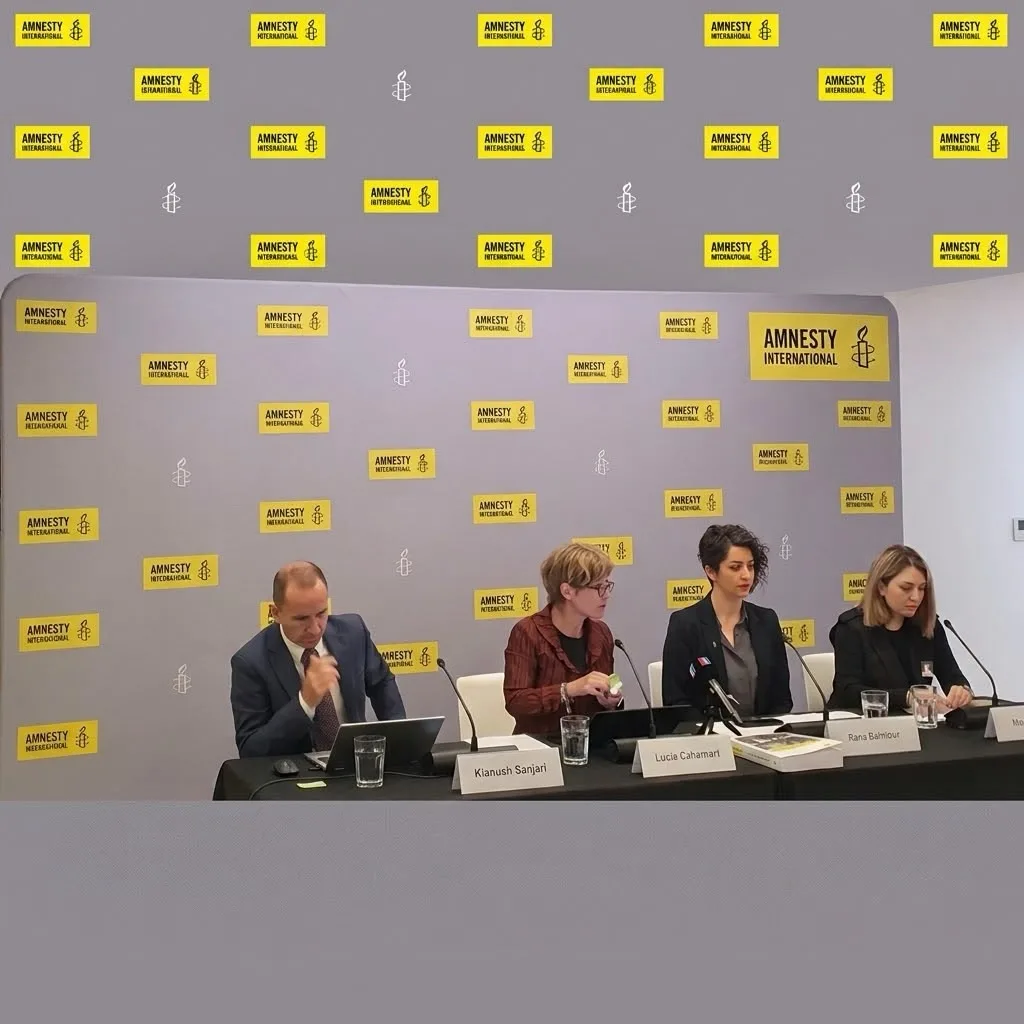
Agnes Callamard, Secretary General of Amnesty International, said at a press conference introducing the report that the Iranian authorities use the issuance and implementation of death sentences as a systematic tool to create fear in society and silence protesters.
According to Callamard, the continuation of a cycle of “impunity” and the lack of accountability for officials of the Islamic Republic have facilitated the recurrence of violent crackdowns. She argued that international avenues for prosecuting those responsible are necessary to address what she described as the machinery of repression.
The Need for an Independent International Mechanism
Raha Bahreini, a lawyer and researcher at Amnesty International, also pointed to what she described as the inability and lack of independence of Iran’s domestic judiciary to investigate state-related crimes. She said that countries that recognize the principle of universal jurisdiction, including Germany, France and Sweden, may initiate judicial proceedings against Iranian officials if they enter their territory.
At the same time, Amnesty International has called for the establishment of a broader international mechanism to investigate these crimes systematically.
At the conclusion of its report, Amnesty International, referring to the tense conditions in the region, emphasized that widespread human rights violations inside Iran must never be used to justify foreign military attacks. It stated that the international community’s response should be based exclusively on justice, the protection of civilians and the principles of international law.