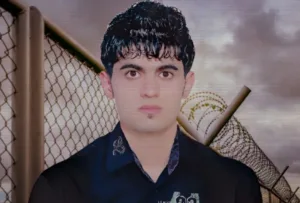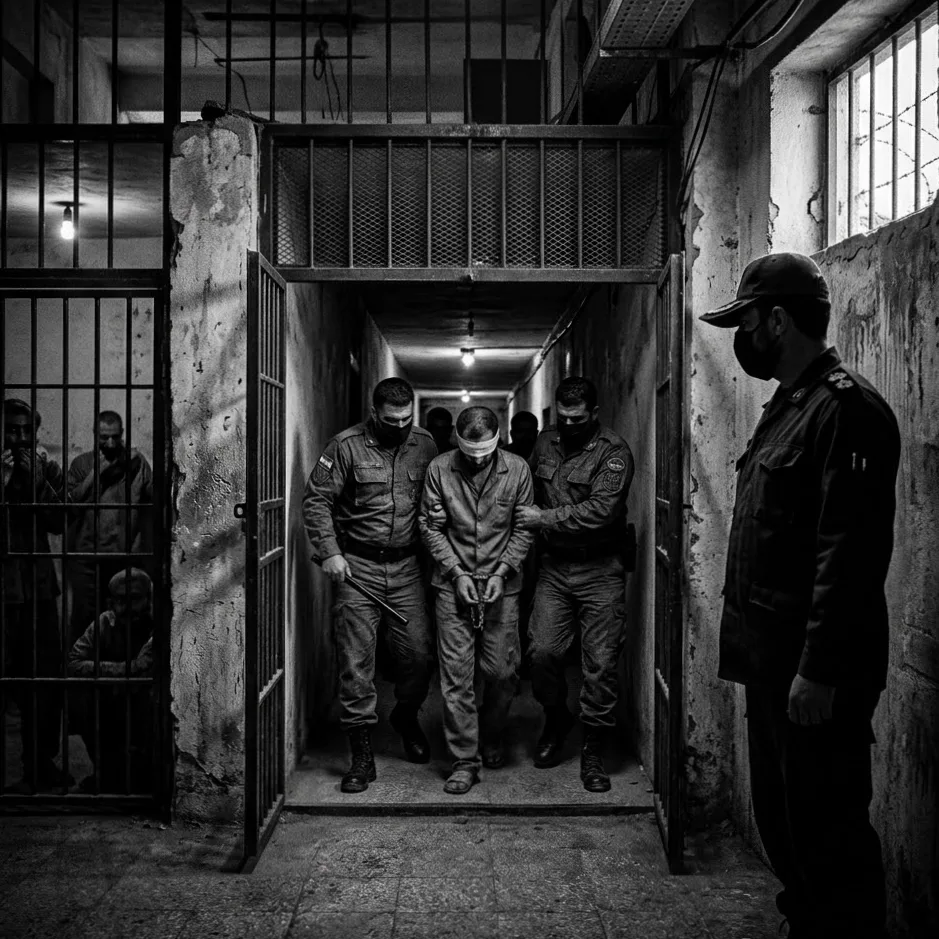
Documented and alarming reports received by the Karoon Human Rights Organization indicate that the appointment of a key figure in the repression and massacre of prisoners as the head of Sheiban Prison has further exposed the fundamental rights of inmates to systematic violations.
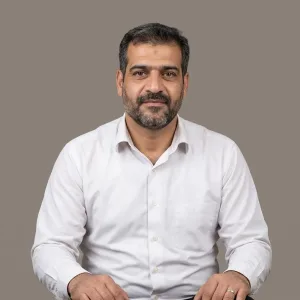
In September 2023, an individual with the surname ‘Khosravi’, who takes extreme security measures to prevent the disclosure of his first name among prisoners, was appointed as the new head of Sheiban Prison in Ahwaz.
Investigations by this organization reveal that this appointment signals a green light from security and judicial authorities to intensify pressure, repression, and unprecedented violence against prisoners, particularly political and ideological detainees of Arab descent.
From War in Syria to Massacres in Prison: Khosravi’s Dark Record
Khosravi, who previously commanded the ‘Special Guard of Sheiban Prison’, is associated with the paramilitary forces known as the ‘Defenders of the Shrine’, having a record of at least three years of involvement in the Syrian war. The presence of military personnel with foreign backgrounds at the helm of prison management reflects the Iranian government’s military and security approach to managing detention facilities; in this approach, prisoners are not seen as citizens with legal rights but as ‘enemies’ deserving of military suppression.
Khosravi’s name is linked to one of the bloodiest events in the history of prisons in Ahwaz. During the tenure of former prison head Ahmadreza Azadeh, he served as his deputy. During the prisoners’ protest uprising at Sheiban on April 1, 2020, which erupted due to the COVID-19 crisis and deprivation of health facilities, Khosravi commanded the field suppression.
He played a central role in the tragedy that resulted in the deaths and injuries of dozens of defenseless prisoners by issuing orders to open fire and directly participating in shooting live and pellet ammunition at inmates; a crime for which none of the perpetrators have been prosecuted to date.
Revival of Torture Tunnels and Return to the Darkest Days of the 1980s
With Khosravi’s ascension to the presidency of Sheiban Prison in September 2023, prison guards have adopted an even more ruthlessly brutal approach, operating with complete judicial immunity. According to reports from informed sources inside the prison, the process known as ‘welcome ceremonies’ or ‘torture tunnels’ for new inmates has been horrifyingly revived. Incoming prisoners are immediately subjected to group beatings by guards in the prison yard and quarantine ward; recently, several of them have suffered broken bones, internal bleeding, and deep injuries due to severe blows from batons and plastic pipes, while being denied access to emergency medical services.
This level of overt violence has severely heightened tensions and insecurity within the prison. One political prisoner held in Sheiban described the prevailing conditions to the Karoon Human Rights Organization, stating: ‘Since Khosravi’s arrival, laws no longer hold any meaning, even on paper. Guards are free to commit any crime. We have effectively returned to the dark era of prisoner repression in the early years of the revolution and the executions following Khomeini’s fatwa. Here, human lives hold no value.’
Judicial Immunity and the Cycle of Violence
The promotion and appointment of individuals like Khosravi and Ahmadreza Azadeh, whose hands are stained with the blood of prisoners, demonstrate that in the judicial structure of the Iranian regime, human rights violations and acts of violence are not seen as ‘individual offenses’ but rather as ‘criteria for evaluation and promotion’ for security managers. This practice is in absolute contradiction to the provisions of the ‘United Nations Standard Minimum Rules for the Treatment of Prisoners’ (the Nelson Mandela Rules) and the international covenants to which the Iranian government is committed.
The Karoon Human Rights Organization considers Khosravi’s appointment as the head of Sheiban Prison a blatant affront to justice and human rights, warning that the continuation of this situation places the lives and health of hundreds of prisoners held in this facility at immediate risk. The organization calls for the urgent intervention of the UN Special Rapporteur on Human Rights in Iran, documentation of Khosravi’s crimes, and his inclusion on the list of human rights sanctions by international bodies. The right to life and physical security of prisoners is a red line that the international community must not remain silent against its violation.